A&M FlowMarketing automation
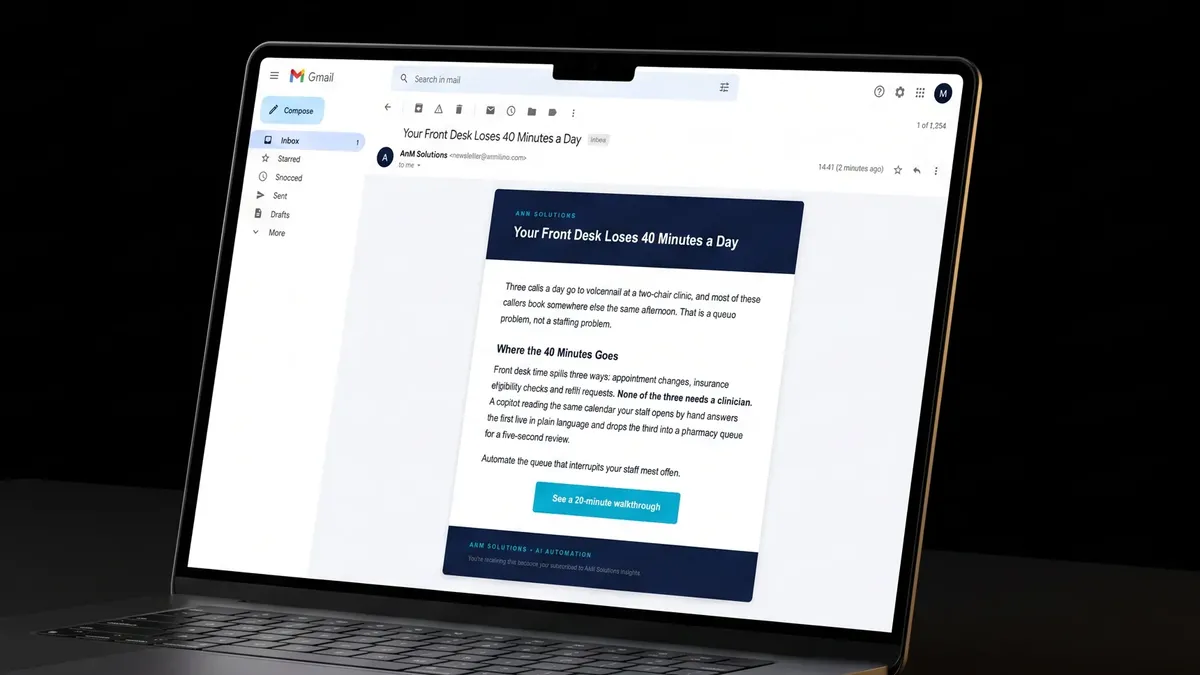
Newsletter written, reviewed and sent from one topic
1Field you have to fill in
6Steps it runs without you
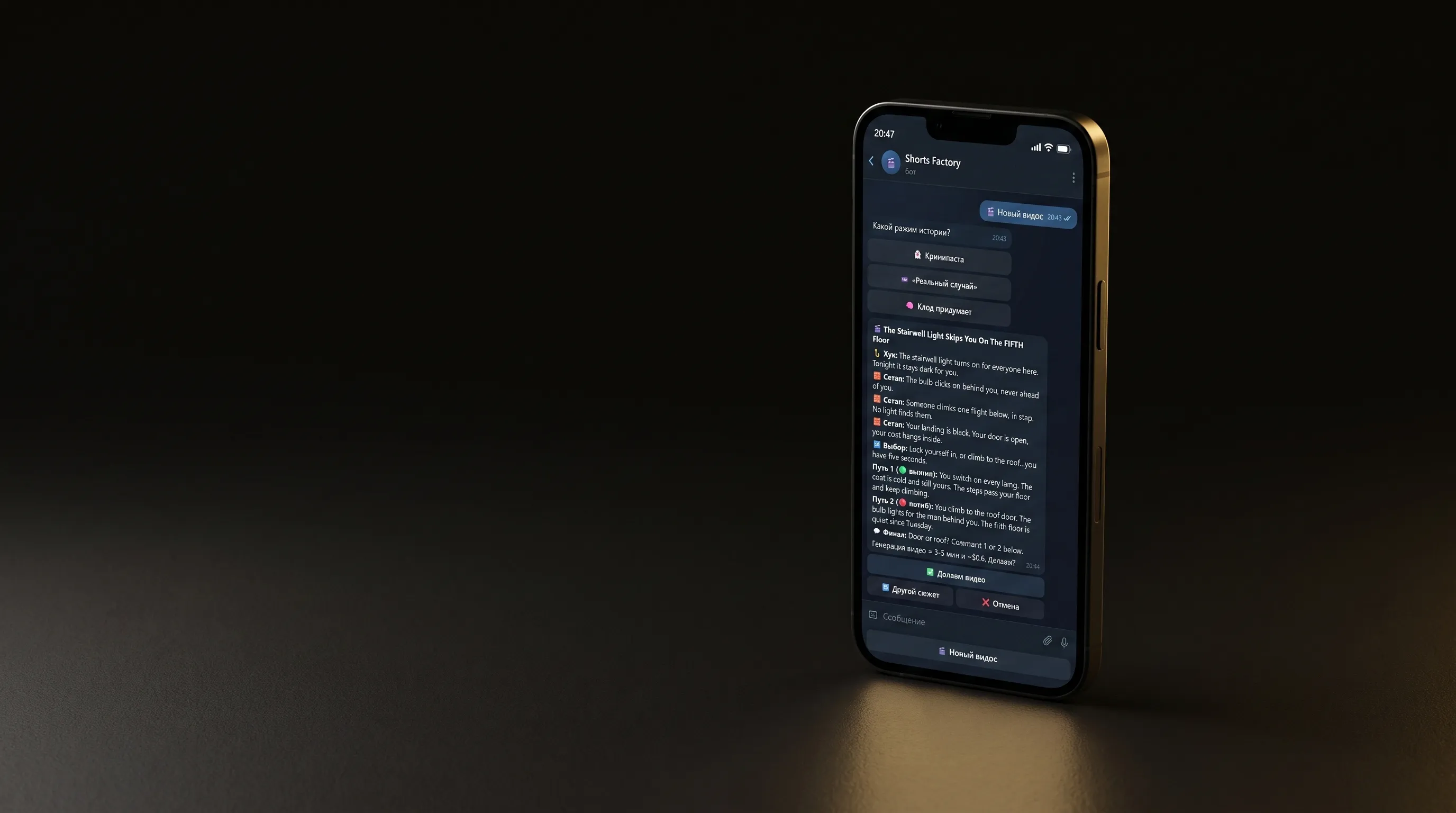
One message starts the run. Claude writes the two-path story, FLUX and ElevenLabs make the stills and the voice, ffmpeg cuts the VHS edit and you approve twice in Telegram. It takes roughly five minutes and half a dollar a video.
Hook, choice, both outcomes
Images ~$0.25, voice ~$0.1, story ~$0.05
Built with Claude Code in 1 day
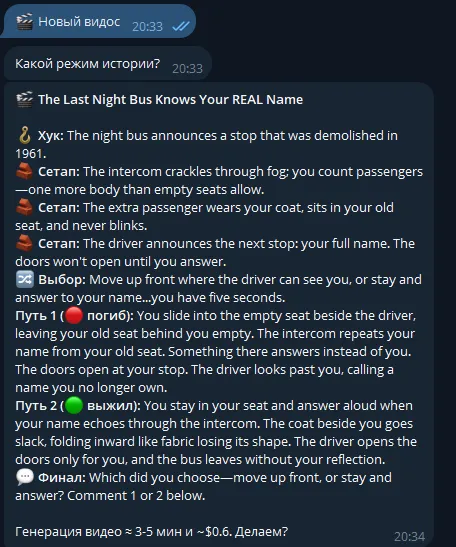
Claude sends a hook, three setups, a split-screen choice and both endings to Telegram for a go or a retry. Every premise is checked against the ones already used, so the channel does not repeat itself.
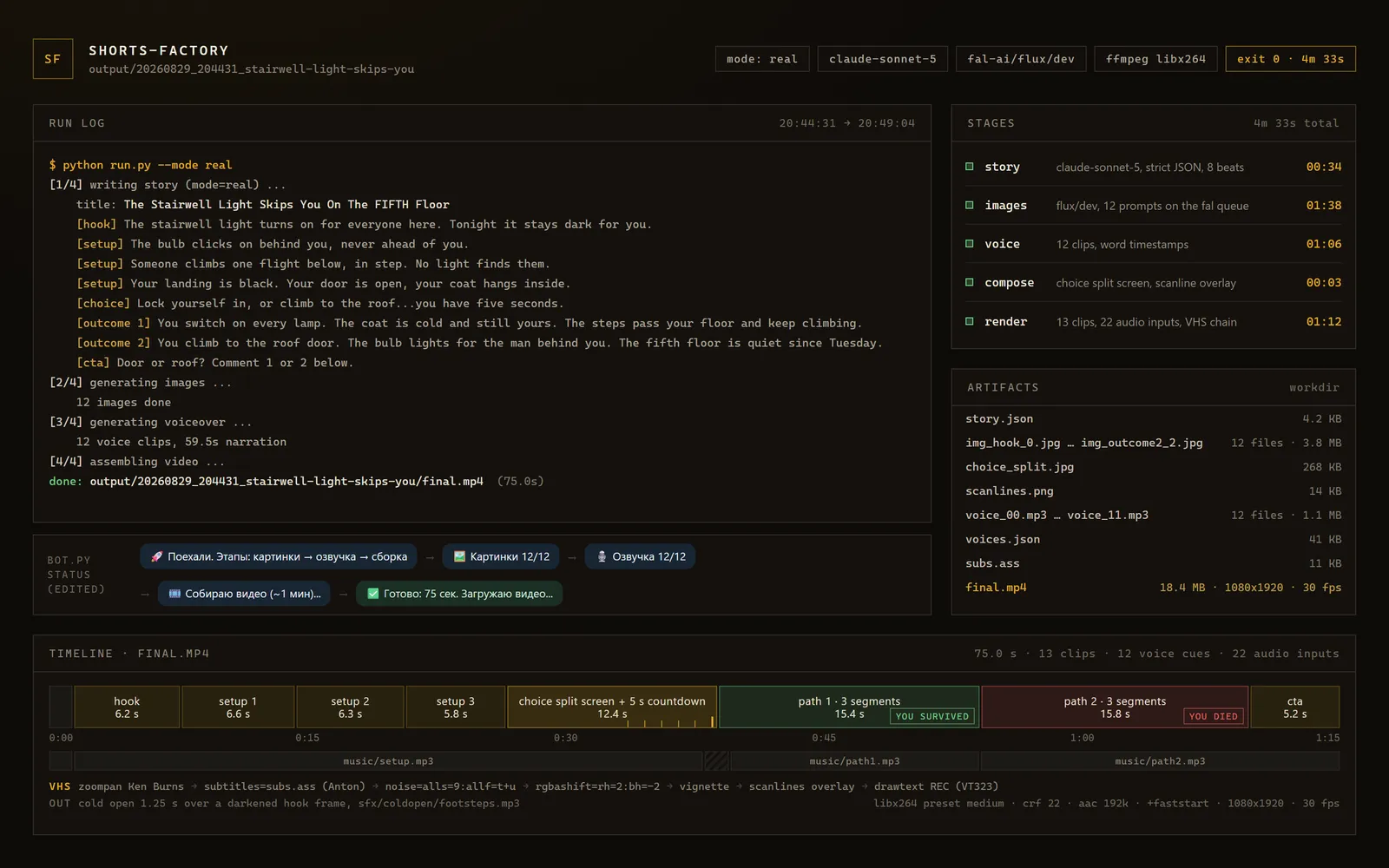
Story, twelve images, twelve voice clips, the split-screen compose and the render take 4 minutes 33 seconds end to end. Out comes a 75 second 1080x1920 mp4 with both endings cut in.
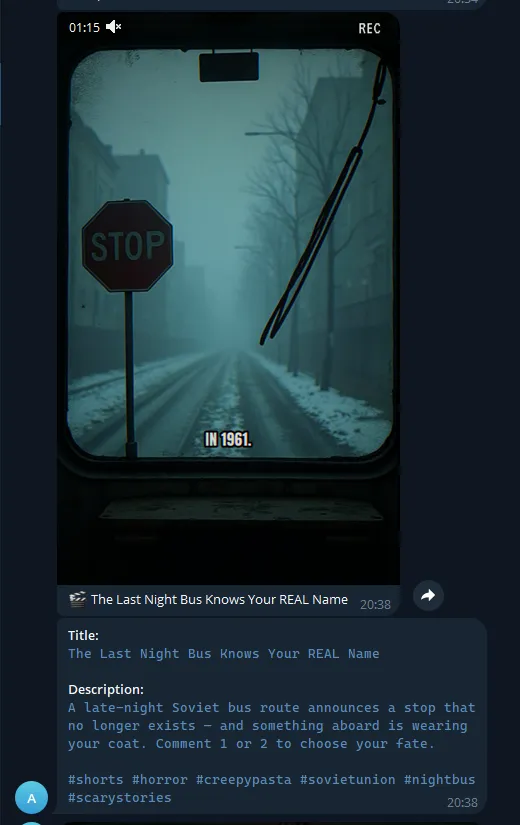
The finished mp4 arrives with its title, description and hashtags, so posting is a copy and a paste. Uploading to YouTube stays your call.
Every horror short meant writing it, generating the images, recording the voice and editing by hand.
Two taps in Telegram and the finished video comes back titled, described and hashtagged.
01Context
A 'which path survives' horror short needs a two-branch story, a consistent set of images to carry it, a narrated voiceover, captions timed to the words and a VHS-styled edit before it is ready to post. Doing all of that by hand for every new short does not scale past a handful of videos, and repeating a premise or a visual set that was already used is easy to miss without a record of it.
02How it works
Claude writes each story as strict JSON, a hook, three setup beats, a split-screen choice and two outcomes, checked against a running store of premises already used so the pipeline never quietly repeats itself. fal.ai's FLUX model renders twelve images per video with a fixed style suffix so the set reads as one consistent look, and fal.ai's ElevenLabs model voices the narration in a single deep voice over a shared music track.
ffmpeg then pans and zooms across the twelve stills with a Ken Burns effect, burns in subtitles timed to the narration and layers a VHS treatment on top: film noise, an RGB channel shift, a vignette, scanlines and a REC indicator.
03Constraints
An aiogram Telegram bot answers only one configured admin chat and drives a two-step approval: it sends the generated story first for a go or a retry, then the finished mp4 for a second approval. Publishing to YouTube itself stays a manual step, since automatic upload needs the account to pass a YouTube Data API audit that has not happened. Cost runs roughly $0.4 to $0.5 per video, split between the images, the voice and the story itself.
ANM SOLUTIONS / CONTACT US
First 30-minute call is free. We scope it, you decide.
Related service · Workflow & Process Automation ›