Own productTrading / research
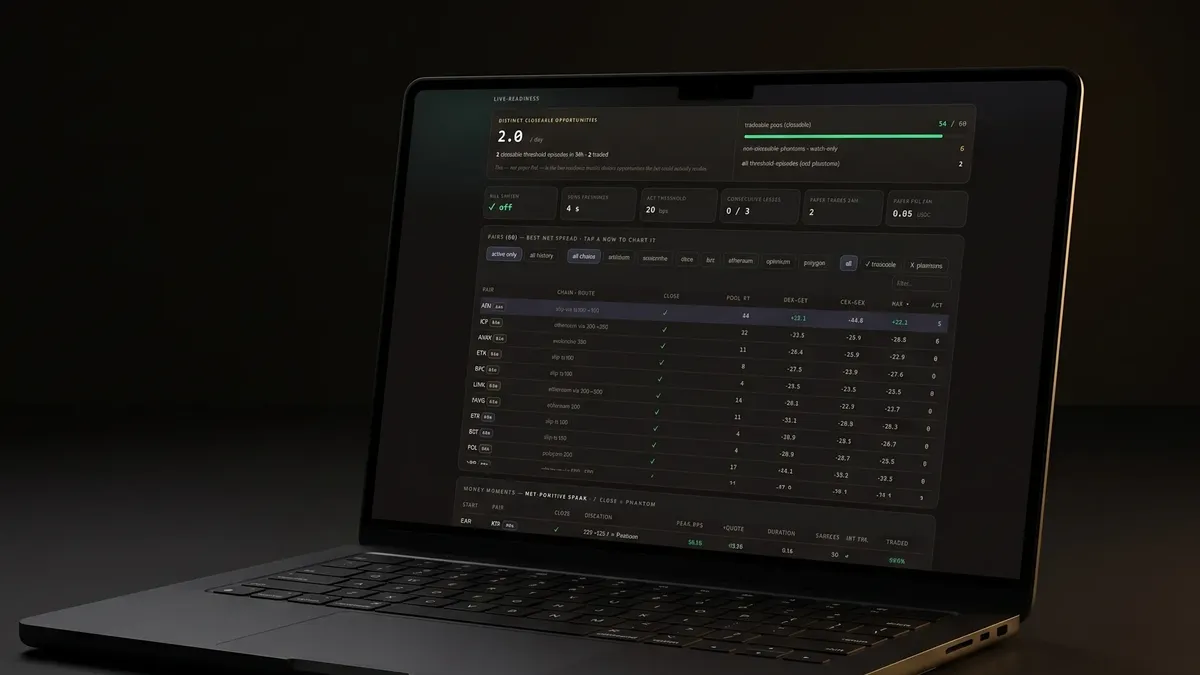
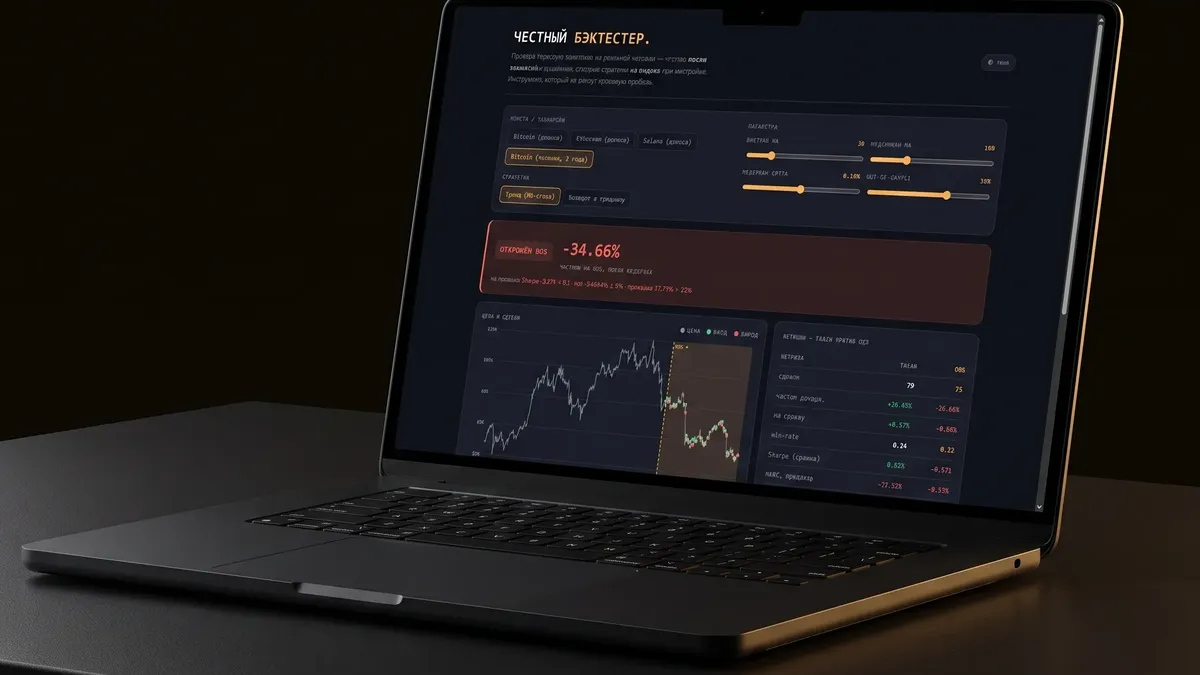
quant-ring, the backtester that rejected both strategies
24Tests on the judge itself
0Strategies cleared the bar
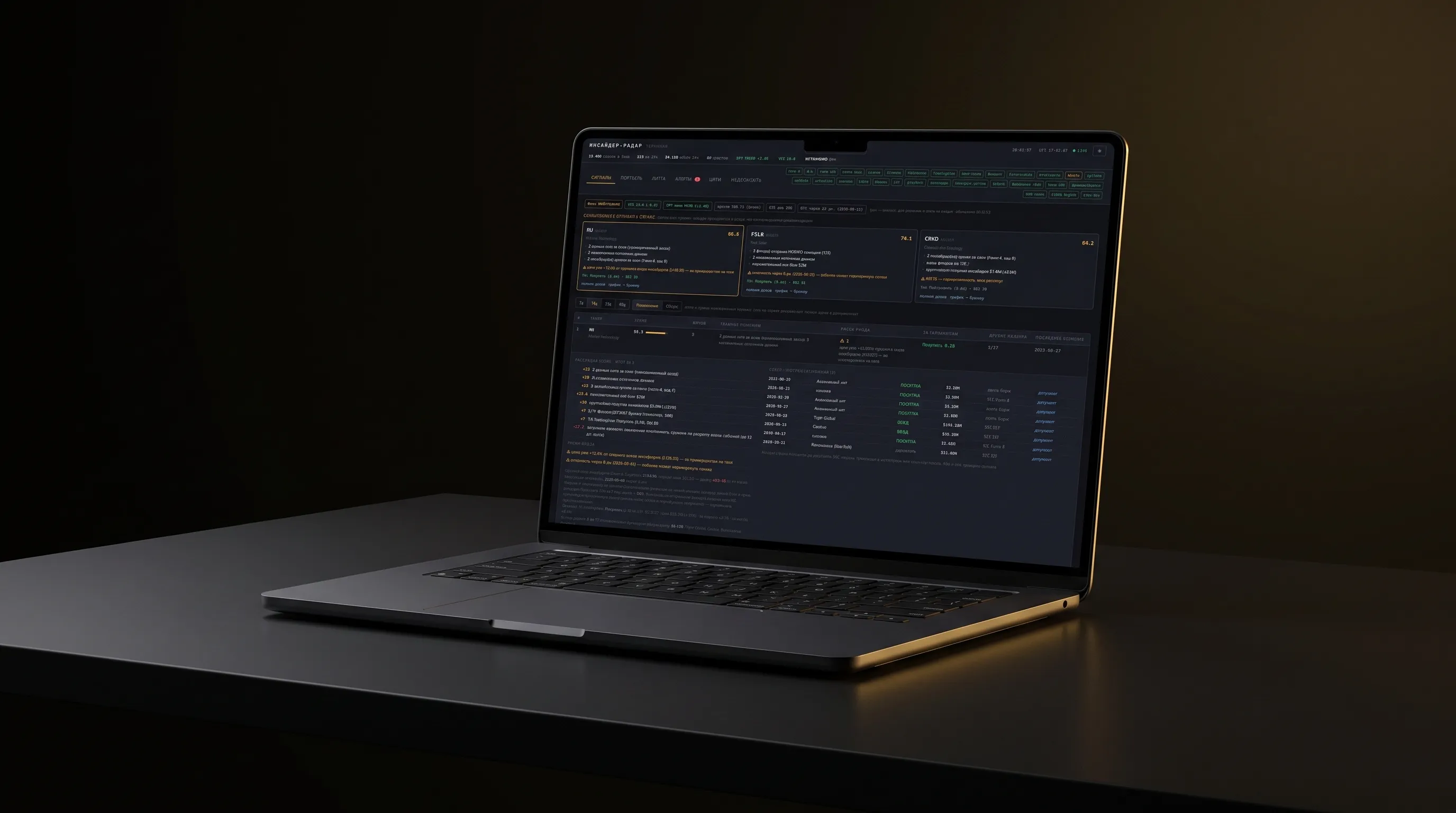
Insider filings, congressional trades, 13F moves and whale wallets fold into one score you can open down to the source document, traded by two paper bots and still marked unproven by its own kill-test.
Built with Claude Code in 16 days
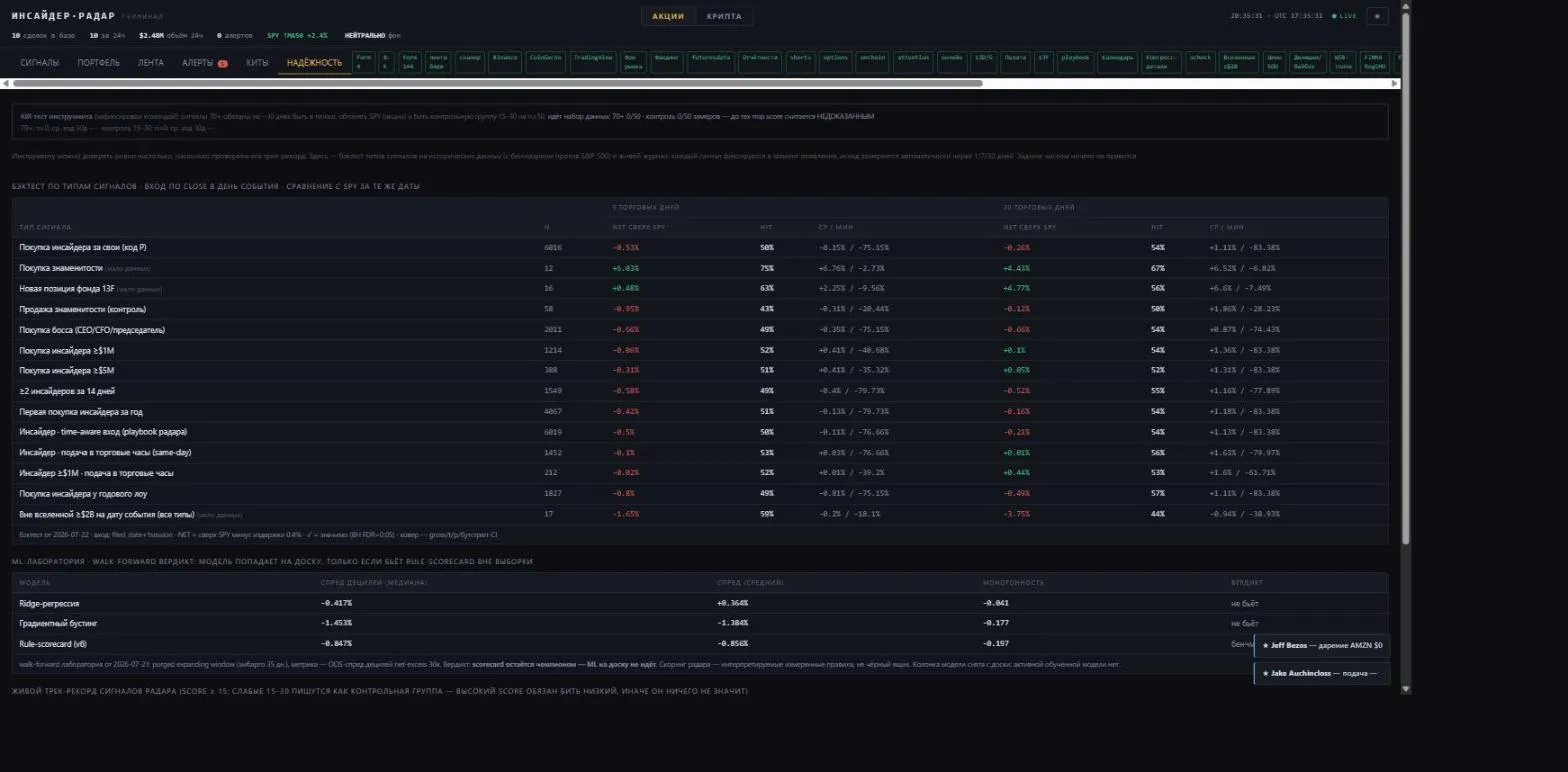
Every signal goes into the journal with its price and benchmark, then gets rechecked at 1, 7 and 30 days against a control group of weak signals. Until a strong signal beats the control group and SPY net of costs, the panel prints unproven.
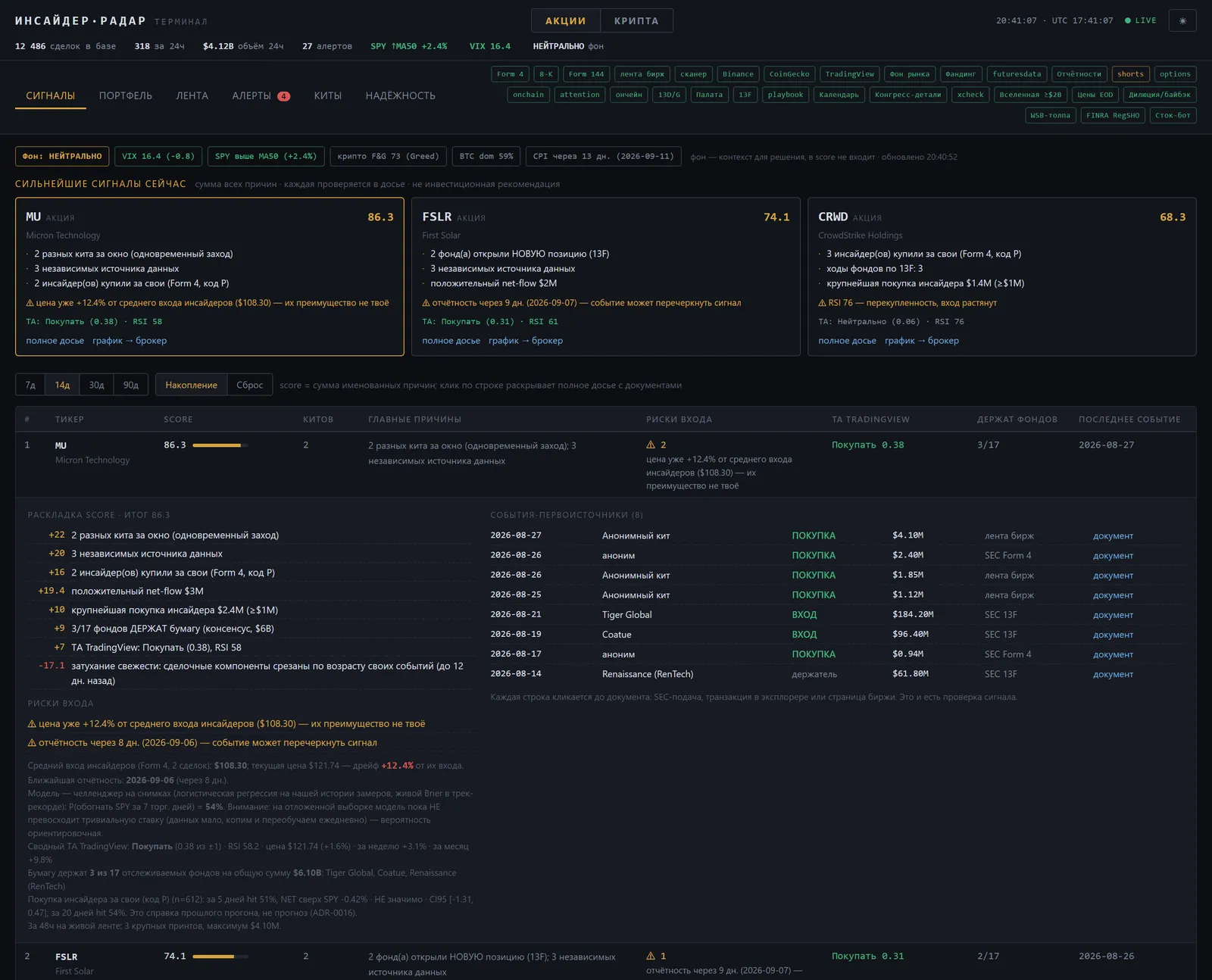
Open a ticker and the score breaks apart into named reasons with their weights, next to the risks of entering right now. Every source event clicks through to the SEC filing or the exchange print behind it.
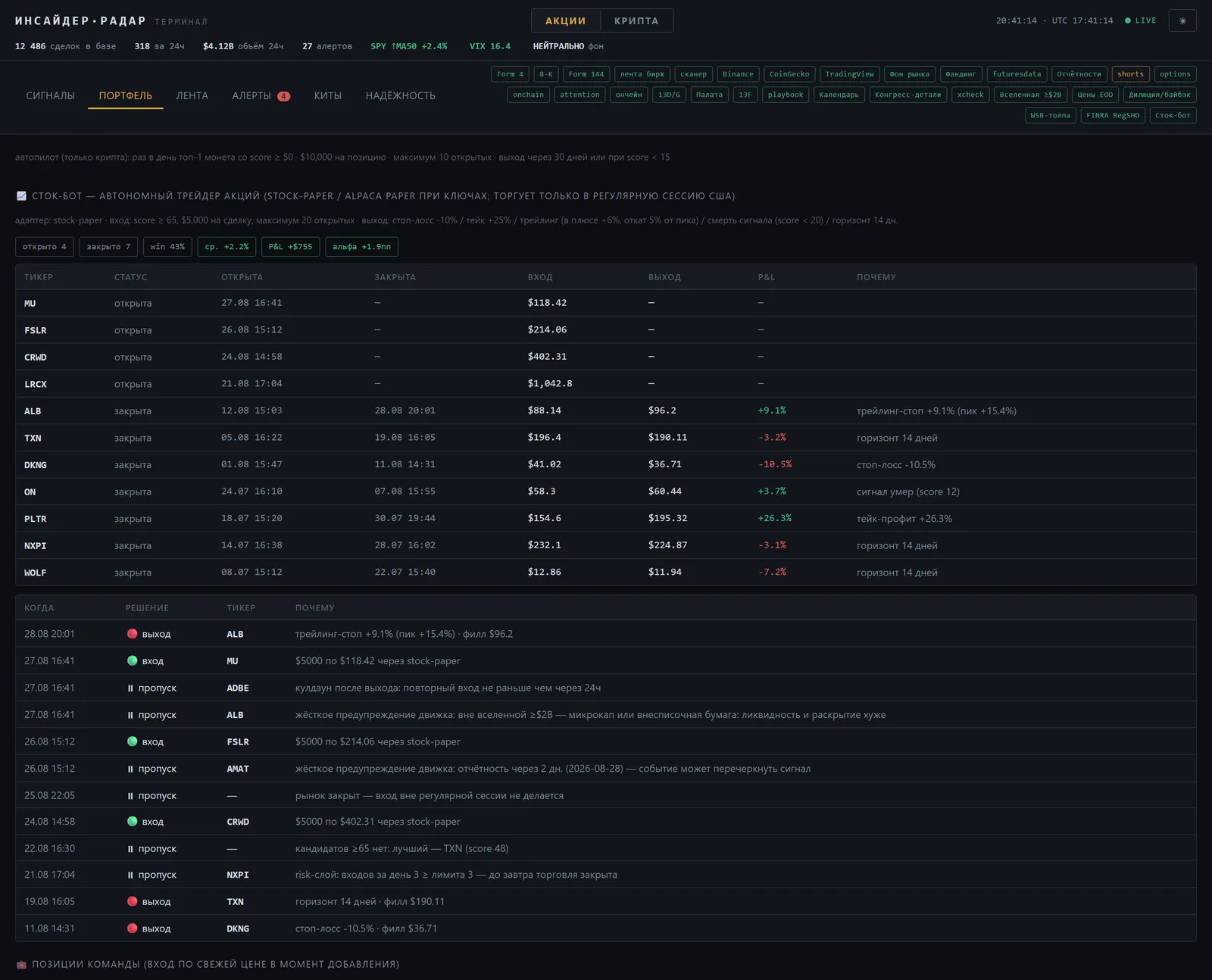
Two paper bots trade the score, one for stocks and one for crypto, and the reason for every decision goes to the journal. Trailing stop, signal death, 14-day horizon or risk limit, the line is written at the moment of the decision and never reconstructed later.
Trackers showed the trade and left you guessing whether it meant anything.
Every signal opens down to its filing, and the kill-test still says unproven.
01Context
Tools that surface insider trades, congressional filings or 13F fund moves already exist, but most of them stop at the data: a trade appears, and it is left to the reader to decide whether it is worth following. This panel goes a step further: it combines several independent smart-money signals into one score, trades that score for real with paper money and measures, in public, whether the score actually beats a benchmark.
02What we built
A dashboard pulls SEC insider filings, congressional trades, 13F fund portfolios, activist stakes and on-chain whale wallets into one convergence score per ticker or coin: a single source never moves it alone, it climbs only when independent signals agree. Stocks and crypto sit in their own tabs with their own feed. Two autonomous paper bots trade that score, one for stocks and one for crypto, and every decision, entering, exiting or skipping a candidate, is journaled with a reason, exposed through a web panel and a Telegram bot.
03Constraints
Every signal is journaled with price and benchmark included, then rechecked at 1, 7 and 30 days; weaker signals are logged too, as a control group. The Reliability tab runs a kill-test on that journal: a strong signal has to beat both the control group and the benchmark, net of costs, before the score is allowed to call itself proven. As of this write-up the kill-test reports zero completed samples in both cohorts, so by its own rule the score counts as unproven. Both bots trade paper only, and this is a research and monitoring panel, not investment advice.
ANM SOLUTIONS / CONTACT US
First 30-minute call is free. We scope it, you decide.